I'm a renter or have a shaded roof. Can I still use solar power?
Solutions by Topic
Newsletter
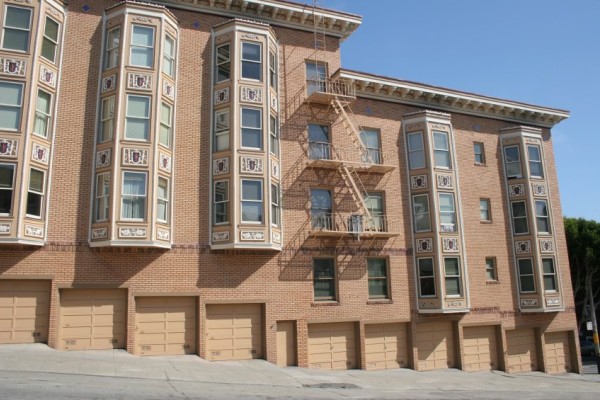
If you have a shaded roof, the short answer is “no, ” and if you are a renter the answer is “maybe.” Renters can benefit from a rule known as virtual net metering that allows them to share the output of a solar system at multi-tenant buildings. Additionally, the concept of community solar could open up solar to renters, those with shaded roofs, and many others. However, it is currently not available to PG&E customers.
Virtual Net Metering
Virtual net metering allows solar energy to be credited to the electricity bills of multiple tenants in a building.
If you are a renter in a multi-tenant building, you and your neighbors can share the benefits of solar energy through an arrangement called virtual net metering (VNM). VNM is the concept of allocating an on-site energy source to tenants across multiple units through the utility billing system, rather than by hard-wiring separate energy systems to each unit’s electricity meter. In addition to simplifying the installation process and saving money, VNM has greater flexibility because the landlord or HOA can administratively reassign shares of energy from one unit to another. Tenants that participate in VNM receive credit on their utility bill just like customers who have a solar energy system hard-wired to their electricity meter.
Under VNM, the solar system owner (likely the landlord) provides PG&E with a list of tenants, including PG&E account numbers, that want to participate, and indicates the percentage of the solar system’s total output that each tenant should be credited for on their bill. The Robinson family in apartment 2 might sign up for 15%, the Garcias in apartment 5 for 10%, and so on. Then, at the end of the month, each family’s electricity usage (kWh) is offset by its share of solar energy, reducing the family’s electricity bill. If a family receives more solar energy than is used in a given month, it receives a credit for the value of the difference. That credit is applied to another month’s bill.
You can learn more about VNM by reading PG&E’s VNM Application and Interconnection Agreement. Building owners or HOAs interested in using VNM to supply solar energy to multiple tenants should also read about options for financing solar systems. Interested renters should speak to their landlords to encourage them to consider installing solar and using VNM.
Community Shared Solar
Community shared solar is the term most often used to describe solar systems that supply electricity to multiple customers within a geographic region (e.g., neighborhood, city, utility service area). In many ways, community shared solar is similar to onsite solar. For instance, the electricity produced by the solar system offsets charges for the participant’s monthly electricity use. However, community shared solar does not require the solar system to be located on a participant’s property, allowing multiple participants to invest in and benefit from a single, centralized solar system.
Community shared solar is currently not available to customers in PG&E’s service territory. However, it would be an useful tool to expand access to solar energy for customers who otherwise are unable to benefit from solar. This includes those who rent, have a shaded roof, do not have the financial resources needed to meet the up-front costs of investing in solar energy on their property, or simply are not interested in hosting onsite solar.
Community shared solar has been successfully implemented by numerous utilities and states, and the California Legislature has considered legislation to create a statewide community solar program. To learn more, download our short paper on Community Shared Solar with the basics of community shared solar, examples of existing programs, and community shared solar’s potential to expand San Francisco’s solar market.
Related Events
Related Solutions
Related Downloads
Related News
Energy
A dynamic city like San Francisco requires the efficient use of clean, renewable energy to meet the needs of today and future generations. Our innovative policies and programs help San Franciscans use energy wisely, while saving money and reducing environmental impacts.
Transportation
SF Environment aims to reduce travel-created carbon by getting people out of cars and instead traveling by walking, biking or public transit. We also are greening the City fleet of vehicles and encourage the public to reduce their impact by supporting cleaner fuels and vehicles.
Zero Waste
Imagine a world in which nothing goes to landfills or to incinerators. We think it is achievable, and SF Environment is doing everything we can to make it happen.
Toxics & Health
As the first city to adopt the Precautionary Principle, San Francisco strives to protect the health of its residents, visitors and the local environment. SF Environment develops programs and policies to help individuals and businesses make safer choices in products, practices and services.
Buildings & Environments
San Francisco is habitat for 800,000 people – meeting needs for space to work, play, and learn; for food, water, and air; for community with local flora and fauna. SF Environment provides support for urban agriculture and forestry and green buildings, helping residents and businesses harness environmental opportunities.
Education & Equity
SF Environment focuses on building community capacity - engaging people throughout the City’s neighborhoods and providing them with the tools, education, and job opportunities to ensure that the places where we live, play, learn, and work are safe and healthy.
Climate Change
Reducing carbon emissions is central to ensuring a sustainable future for San Francisco. Climate change will bring unstable weather, rising sea levels and damage to our city’s natural habitat and infrastructure. SF Environment is committed to mobilizing the City to deal with Climate Change.