Learn how to safely recycle or dispose of every type of battery in San Francisco. From household alkaline and lithium-ion to e-bike and automotive batteries. Find detailed guidance on where to drop them off and how to prepare them for recycling.
Not all batteries are created equal — and neither are their recycling rules.
This guide breaks down how to safely handle and recycle every type of battery used in San Francisco, from everyday AA batteries to high-capacity lithium packs. Learn where to take them, how to prepare them, and what to avoid.
Tip: For basic recycling info or to schedule home pickup, visit our Household Battery Recycling page.
Small Household Batteries (Alkaline, Li-ion, NiMH, NiCd)
Common small batteries used to operate everyday electronic devices. Meant to be easily removed from the device. Include single-use and rechargeable batteries.
Common examples:
AA, AAA, C, D, 9V, button cells, phone and camera batteries
Chemistries:
Alkaline, Lithium (Li), Lithium-ion (Li-ion), Nickel Metal Hydride (NiMH), Nickel Cadmium (NiCd)
Where to recycle:
| Option | Available? | Notes |
|---|---|---|
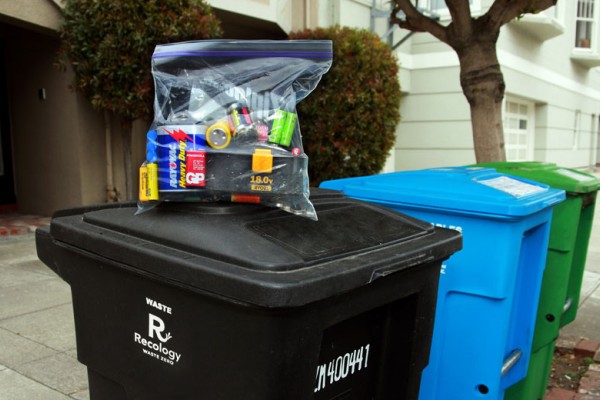
| Curbside | Yes | Tape battery terminals or bag separately |
| Apartment bucket | Yes | |
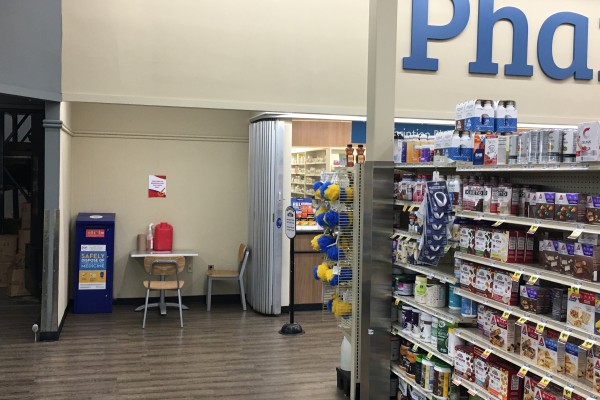
| Retail drop-off | Yes | Look for collection bins at stores like Cole Hardware or Sports Basement retailers. |
| HHW Facility | Yes | View this page for facility location details. |
| HHW Home Pick-up | Yes | Available for residents scheduling HHW collection |
| Bulky item pick-up | No | Not accepted |
| PDRA ("Public Dump") | Yes | For larger or mixed loads |
Additional notes:
- Avoid mixing different battery types in the same bag.
- Important: Always tape the contacts on all lithium and 9V alkaline batteries.
Medium-sized household batteries
Batteries are intended to be easily removed from the device. It's often rechargeable lithium-ion batteries designed to store more energy and deliver higher power for electronic devices.
Common examples:
Batteries from some laptops, cordless power tools, portable jump starters, drones, RC cars, and cordless vacuums
Chemistries:
Nickel metal hydride (NiMH), nickel cadmium (NiCd), lithium-ion (Li-ion), lithium polymer (pouch cell), and lithium iron phosphate (LiFePO₄)
Where to recycle:
| Option | Available? | Notes |
|---|---|---|
| Curbside | No | |
| Apartment bucket | No | |
| Retail drop-off | Yes | Look for collection bins at stores like Cole Hardware or Sports Basement retailers. |
| HHW Facility | Yes | View this page for facility location details. |
| HHW Home Pick-up | Yes | Available for residents scheduling HHW collection |
| Bulky item pick-up | No | |
| PDRA ("Public Dump") | Yes | Visit this page for location details. |
Additional notes:
- Batteries are intended to be easily removed.
Larger-sized batteries (electric bikes and scooters)
Batteries with high-capacity and designed to sustain power for electric devices. Commonly found in electronic mobility devices and portable power stations.
Common examples:
Batteries from micromobility devices (e-scooters, e-bikes, hoverboards) and portable power station
Chemistries:
Lithium-ion (Li-ion), lithium polymer (pouch cell), and lithium iron phosphate (LiFePO₄)
Where to recycle:
| Option | Available? | Notes |
|---|---|---|
| Bin top (Curbside) | No | |
| Apartment bucket | No | |
| Retail drop-off | No | |
| HHW Facility | Yes | View this page for facility location details. |
| HHW Home Pick-up | Yes | SF residents only. SF businesses to use the VSQG program or drop it off at the PDRA ("public dump") |
| Bulky item pick-up | No | |
| Public Dump | No |
Additional notes:
- Batteries which are meant to be easily swapped out and have a capacity greater than 300 watt/hr or 9 volts.
Battery-embedded products
Micromobility devices (electric toothbrushes, scooters, e-bikes, hoverboards), cordless vacuums, cell phones, power banks, and bluetooth speakers. Vaping devices with a non-removeable battery (e-cigs, vape, and electronic nicotine delivery system).
Common examples:
Laptops, cordless power tools, portable jump starters, drones, RC cars
Chemistries:
Lithium-ion (Li-ion), lithium polymer (pouch cell), and lithium iron phosphate (LiFePO₄)
Where to recycle:
| Option | Available? | Notes |
|---|---|---|
| Bin top (Curbside) | No | |
| Apartment bucket | No | |
| Retail drop-off | No | |
| HHW Facility | No | |
| HHW Home Pick-up | Yes | SF residents only. SF businesses to use the VSQG program or drop it off at the PDRA ("public dump") |
| Bulky item pick-up | No | |
| PDRA ("Public Dump") | Yes |
Additional notes:
- Collect entire product: Do NOT attempt to remove non-replaceable batteries - FIRE RISK
- If battery is designed to be removed (e.g. power tools) it can be managed as a loose battery
- Devices containing federally regulated substances (e.g. cannabis) are prohibited
Automotive/Marine batteries (Lead acid)
Car batteries are large, lead-acid batteries that provide the high burst of electrical power needed to start a vehicle’s engine and operate its electrical systems
Common examples:
Cars, trucks, boats, uninterruptible Power Supplies (UPS units), portable jump starters, and children's electric 'ride-on' toy cars
Chemistries:
Lead-acid wet, Lead-acid gel, Small Sealed Lead Acid (≤11 lbs),
Where to recycle:
| Option | Available? | Notes |
|---|---|---|
| Bin top (Curbside) | No | |
| Apartment bucket | No | |
| Retail drop-off | No | |
| HHW Facility | No | |
| HHW Home Pick-up | Yes | SF residents only. SF businesses to use the VSQG program or drop it off at the PDRA ("public dump") |
| Bulky item pick-up | No | |
| PDRA ("Public Dump") | Yes |
Additional notes:
- Batteries are intended to be easily removed
Damaged, Defective, or Recalled batteries (DDR)
Chemistries:
Lithium (Li), Li-ion, lithium polymer (LiPo), Nickel Metal Hydride (NiMH), and Nickel Cadmium (NiCd)
Common examples:
Laptops, cordless power tools, portable jump starters, drones, RC cars
Where to recycle:
| Option | Available? | Notes |
|---|---|---|
| Bin top (Curbside) | No | |
| Apartment bucket | No | |
| Retail drop-off | No | |
| HHW Facility | No | |
| HHW Home Pick-up | Yes | SF residents only. SF businesses to use the VSQG program or drop it off at the PDRA ("public dump") |
| Bulky item pick-up | No | |
| PDRA ("Public Dump") | Yes |
Additional notes:
- Batteries are intended to be easily removed