Since January 1, 2022, SFE has recorded over 15.867 million pounds of edible food recovered by citywide partner.
California Senate Bill 1383 (SB 1383) aims to reduce greenhouse gas emissions by diverting organic waste from landfills through landfill diversion and organics recycling. Recovering and redistributing edible food to people to eat is a key food waste solution that keeps food out of the landfill. Preventing food waste is climate action that supports San Francisco Environment (SFE)’s Climate Action Plan, zero waste goals, and commitments to environmental justice and a circular economy. SFE has led food waste prevention and food recovery programs long before SB 1383 took effect.
The state law has only amplified our efforts with city partners and community organizations across the local food system. Since January 1, 2022, SFE has recorded over 15.867 million pounds of edible food recovered by citywide partners – strengthening food access, hunger relief, and our broader climate goals
Edible Food Recovered 2022 to 2024
The following data was reported by SF organizations that received donations of surplus food from businesses and institutions (grocery stores, wholesalers, restaurants, cafeterias, universities, etc.):
2022
4.969M pounds
2023
4.263M pounds
2024
6.635M pounds
Total since SB 1383 took effect: 15.867M pounds
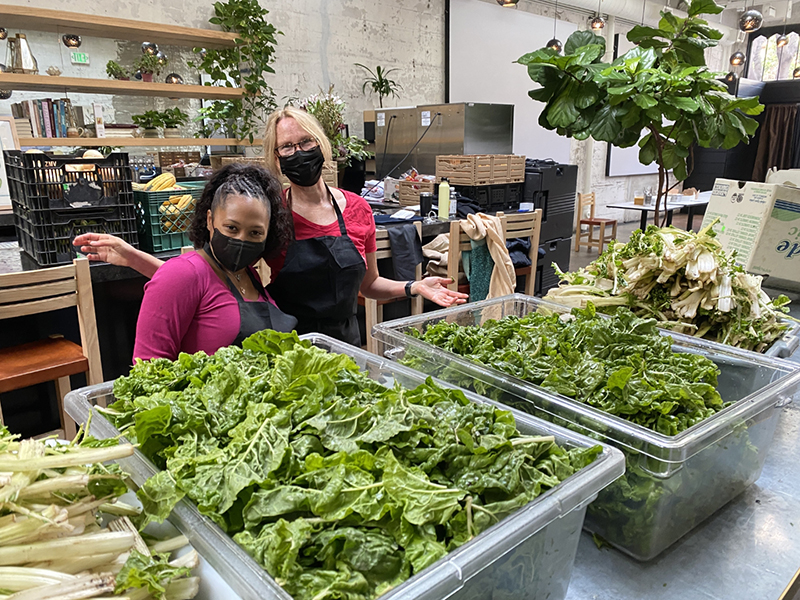
Volunteers sort recovered chard. Photo credit: Farming Hope.
Partnership Spotlight: The SF Market and Food Connect
Every other month, SFE convenes the SF Food Recovery Network, a growing group of over 30 food recovery and community organizations focused on food rescue, to discuss challenges, questions, and trends across the food system. We heard a clear need: resources to move and transport surplus food from donors to neighborhoods for distribution.
The SF Market connects and grows the region’s food and agriculture community from its wholesale market in the heart of San Francisco, playing a vital role in the local food system and food access.
Food Connect bridges gaps in our food system to end hunger, stop food waste, and build health, advancing sustainable food system and environmental justice.
The challenge:
The SF Market donates on average 21,500 pounds of surplus food a week! They are a talented team of one—all food recovery work is carried out each morning by the Food Recovery Project Manager. The market doesn’t provide transportation—recipients must pick up and deliver the surplus food themselves for community distribution.


The methodology:
SFE developed a food recovery transportation funding program based on a cost per pick up model to fill the logistics gap and help support organizations to move food from point A to point B. Food Connect applied and was awarded transportation funding to ensure The SF Market’s high quality excess produce could reach the bellies of San Francisco residents.
The results:
Between March and September 2025, Food Connect transported 527,821 pounds of edible food from The SF Market to local community organizations, including Farming Hope, Booker T. Washington Community Service Center, Casa De Apoyo, and Mission Food Hub.

We’re constantly evolving our approach to best support San Francisco's food system as behaviors shift and food redistribution becomes standard practice for local businesses. Join us on this journey to stop food waste and strengthen sustainable food systems. Together we can expand food access and deliver practical food waste solutions across our city!