For more than 20 years, San Francisco has been a leader in implementing effective zero waste programs. Browse the timeline and topics below that chart the city’s progress toward our climate goals.
A timeline of action to achieve zero waste in San Francisco
Topic 1: Expanding recovery services for landfill diversion
Explore San Francisco’s journey to zero waste as we reduced the amount of material sent to landfill.
-
Curbside Collection: The Next Generation
In April 1999, San Francisco piloted the Fantastic Three program to 2,800 households and 50 small businesses. In 8 months, the pilot program averaged almost 46% diversion from landfill.
Read the article (Resource Recycling, 2001)
-
63 Percent Diversion and Rising
San Francisco reached a 63% diversion rate in 2002, exceeding the state mandate of 50% diversion by 2000. By then, the Fantastic Three program was rolled out to nearly 150,000 single-family households.
Read the article (BioCycle, 2005)
-
The End of Garbage
In 2007, San Francisco had a recycling rate of 68%, the highest of any city in the United States. At this time, the national recycling rate for municipal solid waste was at 32%.
Read the article (Fortune, 2007).
-
Solid Waste Management and Recycling in San Francisco, California
The Bay Area region averaged 64% diversion and San Francisco reached 72% diversion by the end of 2007. Based on a 2006 waste characterization study, 76% of material being sent to landfill could have been recycled or composted.
Read the report (2009)
-
Zero Waste on San Francisco’s horizon
In 2008, San Francisco reached 77% diversion, surpassing its goal of 75% by 2010. This was a major increase from the 25% diversion rate recorded in 1990.
Read the article (BioCycle, 2011)
How San Francisco Calculates 77 Percent Diversion: Web extra (Biocycle, 2011)
-
Toward zero waste
Explains factors that contributed to San Francisco’s successfully high diversion rate.
Read the article (SPUR, 2010)
-
The Story of Zero Waste
Recaps the work of San Francisco Environment’s Zero Waste team through the city government, residential, and commercial sectors.
Read the article (Resource Recycling, 2011).
Topic 2: Source-separated organics program
Learn about the history of San Francisco’s landmark composting program, the first compost collection service in a large city.
-
Food residuals put city on track to over 50 percent diversion
Commercial food collection piloted in 1996 and expanded in 1998, and residential food composting collection expanded in 2000 after a pilot period. By the end of 2001, nearly 40,000 tons per year of compostable material were being collected and composted.
Read the article (BioCycle, 2002)
-
No flies on S.F.’s new composting law
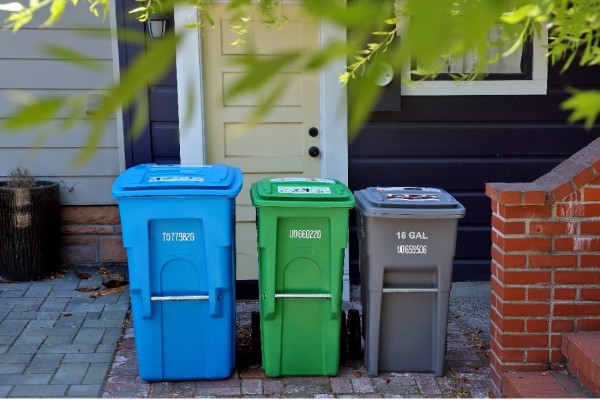
Starting in 2009, the Mandatory Recycling and Composting Ordinance requires all residences and businesses to sort and divert waste into the blue recycling and green composting bins. As of 2009, 3,500 of 4,200 San Francisco restaurants were participants in composting. Finished compost was sold to regional farms, vineyards, and golf courses.
Read the article (San Francisco Chronicle, 2009).
-
Zero Waste on San Francisco’s Horizon
Recology reported having composted over 907,000 tons of food scraps and yard waste since the organics recycling program’s launch in 1996. By 2011, the program reached around 7,200 commercial accounts and around 6,000 apartment buildings, collecting approximately 600 tons of compostable material per day. The program was recycling nearly 220,00 tons annually.
Read the article (BioCycle, 2011)
-
Residential Food Waste Collection in the U.S.
In November 2011, the city surpassed 1 million total tons of organics diverted from landfill. By 2012, food waste composting service reached approximately 90% of San Francisco’s 350,000 households.
Read the article (BioCycle, 2012)
Topic 3: Mandatory Recycling and Composting Ordinance success story
See an overview of our success in implementing the three-bin collection system with requirements for proper sorting.
- 2000: The city establishes three bin collection system for single-family residences; some multi-family and many commercial premises opt to participate.
- 2009: Ordinance signed into law; San Francisco becomes first city in California to adopt mandatory recycling and composting (with food scraps) enforcement ordinance.
- 2019: Ordinance amended to require audits for large refuse generators and follow-up engagement of zero waste facilitators as needed.
- 2020 Outcomes: 99% of properties have adequate, mandatory collection. 25,000 multi-family buildings and commercial accounts with mandatory collection. $1,000 potential daily fines for large generators. Read more.
Topic 4: Construction & Demolition and special material recovery
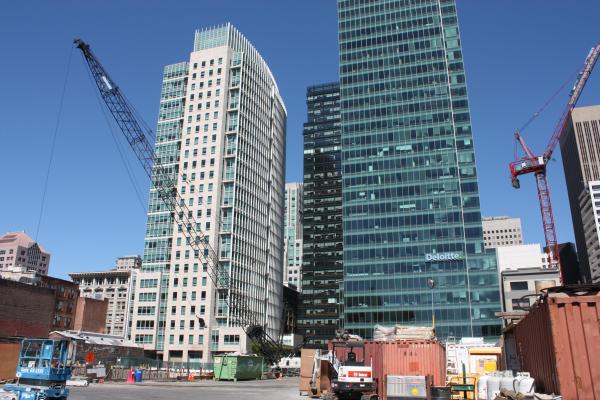
Find out how San Francisco’s construction and demolition (C&D) collection facility was established to help process heavy duty materials.
-
Mixed C&D recycling on-line in San Francisco
In July 2003, the city’s waste transfer station launched the integrated Material Recovery Facility (iMRF) to recycle mixed C&D debris. By 2004, the facility was averaging 4,380 tons per month with over 85% diversion.
Read the article (BioCycle, 2004)